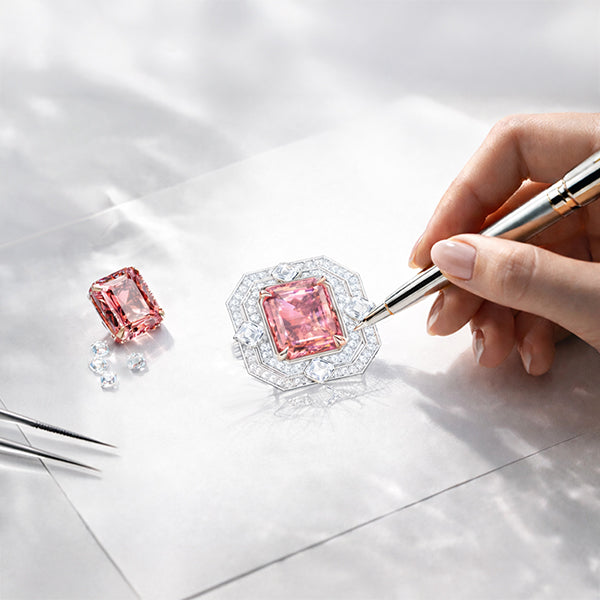
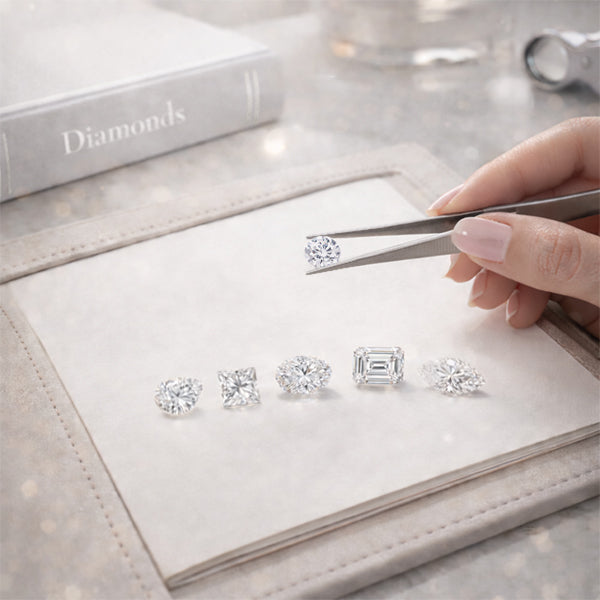
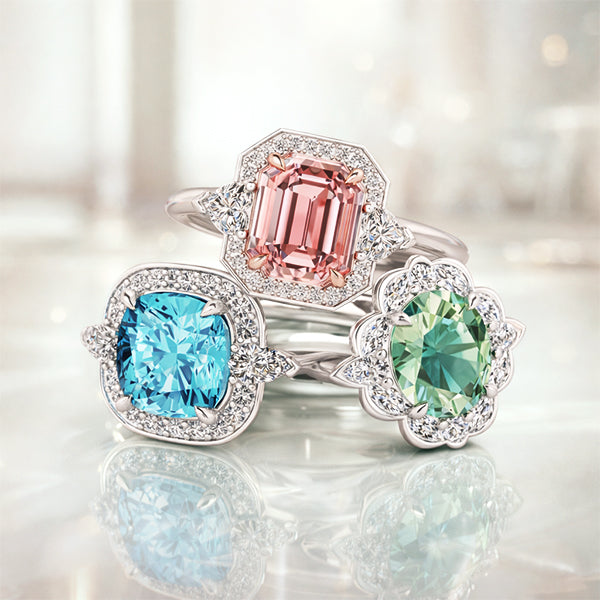
Shape affects how colour is displayed. Fancy shapes like radiant, cushion, and pear can enhance colour saturation, making them appear more vivid compared to round brilliants.
As with white diamonds, carat measures weight. In fancy colours, larger sizes can dramatically intensify the colour appearance, increasing rarity and value.
Fancy colour diamond pricing depends mainly on hue, saturation, and tone rather than clarity or cut. Rare hues like vivid blue or pink command exceptionally high prices.
Refers to the smoothness of the diamond's surface after cutting. Higher polish grades indicate fewer surface imperfections, enhancing the diamond’s brilliance.
Cut in fancy colours aims to maximise colour intensity rather than brilliance. Modified cuts, like radiant or cushion, are popular for enhancing depth of colour.
While important, symmetry may be slightly compromised in favour of achieving the most vibrant possible colour display.
The defining factor in value—graded on hue (colour), tone (lightness/darkness), and saturation (intensity). “Fancy Vivid” grades are the most prized.
Table size influences how much light enters the stone, affecting both colour display and brilliance. Fancy colours often have slightly larger tables to emphasise hue.
Less critical than colour in value assessment. Inclusions may be more acceptable if the diamond displays exceptional colour intensity.
Depth impacts both colour saturation and brilliance. Slightly deeper cuts are often used to intensify fancy colour appearance.
Can affect perceived colour—sometimes intensifying, sometimes muting it. In rare cases, it can create unique visual effects under UV light.
Reports detail colour origin (natural vs treated) and grading. GIA is highly respected for fancy colour grading consistency.
Affects how light refracts and displays the diamond’s colour. Steeper angles can deepen perceived hue.