







FANCY DIAMONDS
When we use the word "Fancy” in relation to diamonds we are talking about two things:
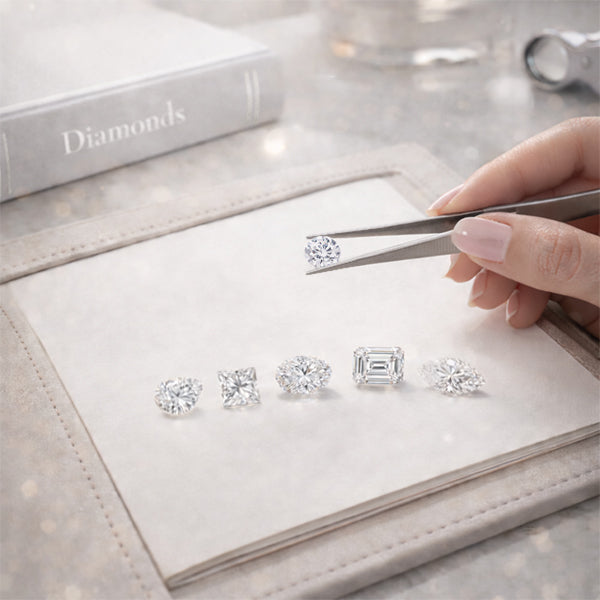
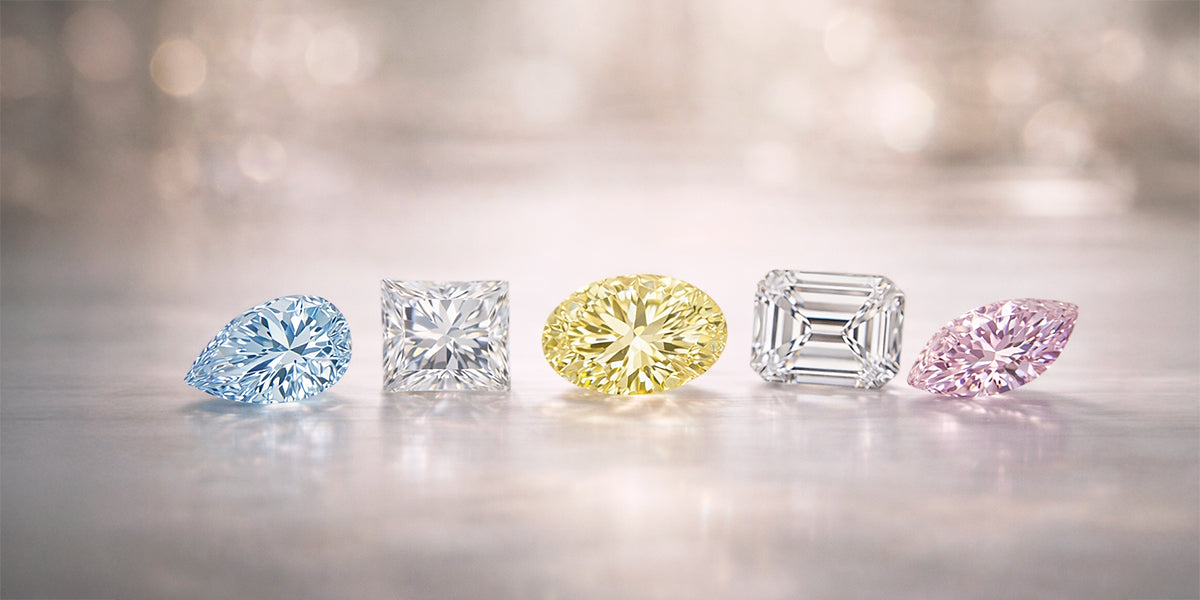
- Fancy Shapes – Anything that is not round
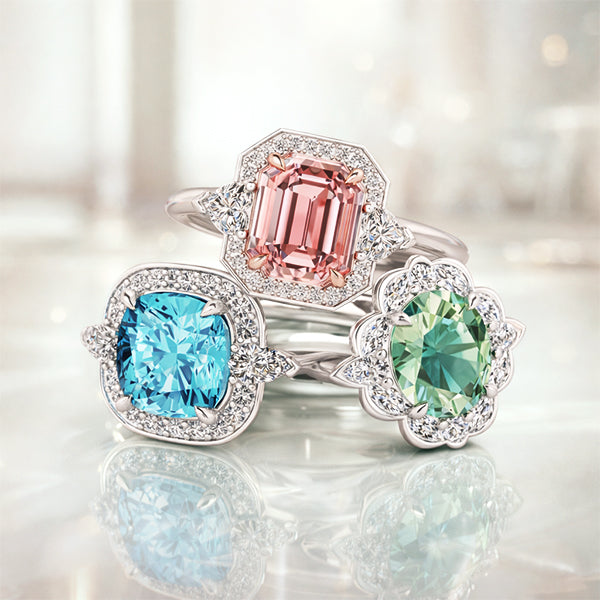
- Fancy Colours – Anything that is not white or near white
Fancy Shaped Diamonds
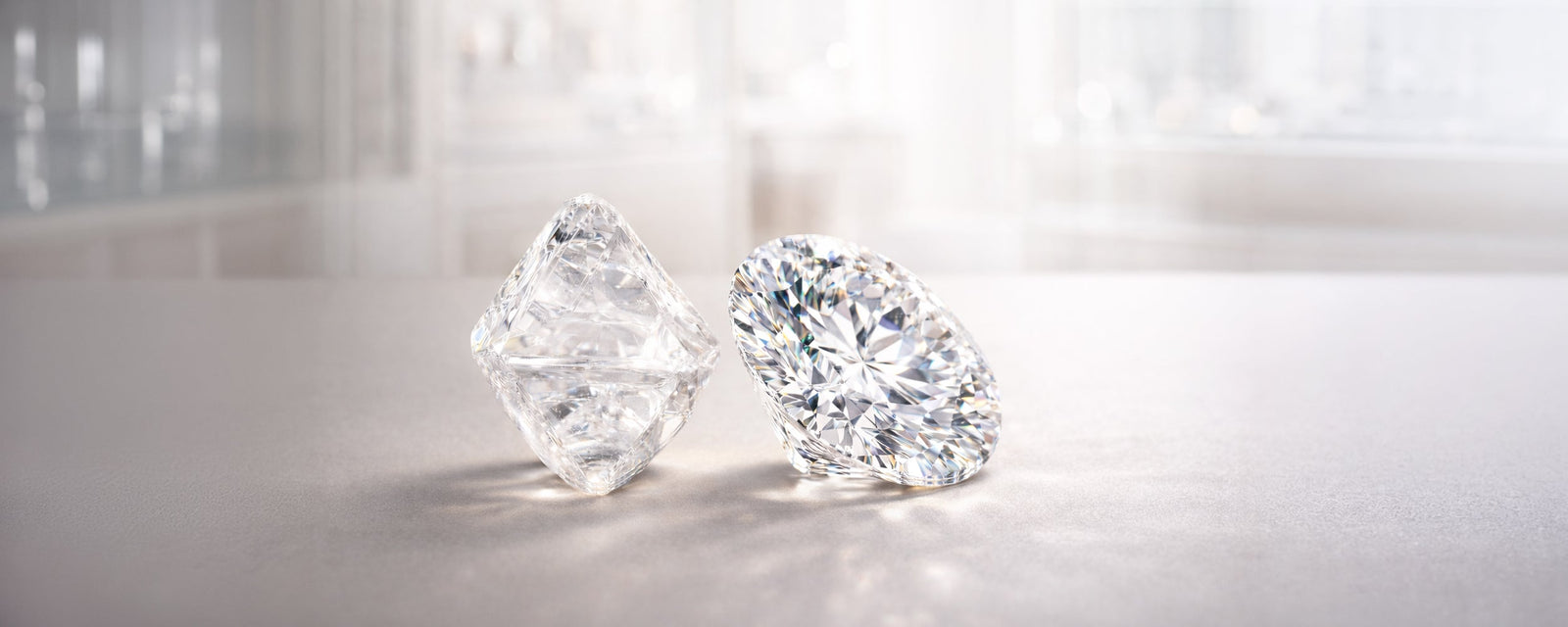
Fancy shaped diamonds refer to any diamond cut that is not a round brilliant. While the round brilliant is the most traditional and popular diamond shape, fancy shapes offer a wide range of appearances, often providing a unique look and, in many cases, better value per carat.
Common Fancy Diamond Shapes:
Princess
Square or rectangular with sharp corners, brilliant faceting for sparkle.
Cushion
Square or rectangular with rounded corners, soft "pillow-like" look.
Oval
Elongated round, offers brilliance with a slimming effect on the finger.
Pear
Teardrop shape, combines round and marquise, often used in pendants.
Marquise
Football-shaped, maximizes carat weight appearance.
Emerald
Rectangular step-cut, elegant and open faceting style.
Asscher (Square Emerald)
Square version of emerald cut, step-cut with an “X” pattern.
Radiant
Square or rectangular with cropped corners and brilliant type faceting.
Heart
Romantic heart shape, requires precision cutting.
Trilliant
Triangular shape, often used as side stones.
Some examples of Special Patented Fancy Cuts
Lily®

The Lily® is the ultimate jewel in the crown. After many years of development, cutting this masterpiece diamond became possible using the most sophisticated novel technology available today.
Smooth round lines characterize the 4 delicate petals of the Lily®, comprised of 77 meticulously polished facets which breath “fire” and exceptional “life” into the glistening diamond.
Orchidea®

The Orchidea® resembling the magnificent Orchid, features a gently pointed tip at the end of each luminescent petal. This breathtaking shape is built of 61 facets, perfectly aligned to create brilliance and fire.
Each diamond is skillfully handled with state of the art tools to ensure the stunning effect that the Orchidea® has become known for. Mo true diamond lover can overlook this young, fresh and innovatively designed piece.
Both the Lily® and Orchidea® transform the beauty of nature into graceful matchless diamonds and are exclusively available under Lili Jewelry brand.
Crisscut®

The Crisscut® 85 facet configuration is simply the most brilliant way to cut a diamond, revealing its natural beauty. The Crisscut® long crisscrossed facets stress the stone’s length, while the shorter crisscrosses give the beholder a feeling of depth. Together they bounce light off one another and give the Crisscut® diamond its patented electricity.
Advanced technology was used to calculate and design this diamond in order to give it its superb reflective quality and incomparable brilliance for a stone of this shape. The Crisscut® unique faceting optimizes the reflection of light, thus intensifying its brilliance.
Crisscut® Cushion

The Crisscut® Cushion’s 85 facets perfect the traditional cushion cuts by applying the Crisscut® facets configuration.
Crisscut® Cushion diamonds are formed with an elegant simplicity, symbolic of a refined and expressive style fitting a one of a kind personality.
The innovative internal facet design of the Crisscut® Cushion maximizes both the brilliance and fire of this modified fancy shape diamond.
Meteor®

The Meteor Cut® was born on 10/10/10. This superb diamond cut has a decagonal shape, and its 10 straight walls are wonderfully built of 71 facets. It took 10 months of diligent work and persistent attempts to overcome the technical challenges, in order to cut the diamond with flawless symmetry, each facet perfectly angled, so that it radiates dazzling brilliance. With its exceptional luminosity and endless refraction of light, any Meteor Cut® diamond is easily recognized at first glance.
Key Characteristics of Fancy Shapes:
Cut style: Can be brilliant cut (sparkly) or step cut (sleek and clear).
Face-up appearance: Shapes can elongate the look of the finger or maximize spread.
Value: Fancy shapes are generally less expensive per carat than round brilliants. This is usually as a result of less wastage in the cutting and polishing from rough to the finished polished gem.
Uniqueness: Offer more personality and individual style compared to round cuts.
Fancy Colour Diamonds — Nature’s Most Vivid Masterpieces
While most diamonds are prized for their absence of colour, fancy colour diamonds are celebrated for the presence of it. These extraordinary gems lie outside the traditional D-to-Z colour scale and are graded instead by the intensity, hue, and saturation of their colour—offering a spectrum as diverse and dazzling as nature itself.
What Is a Fancy Colour Diamond?
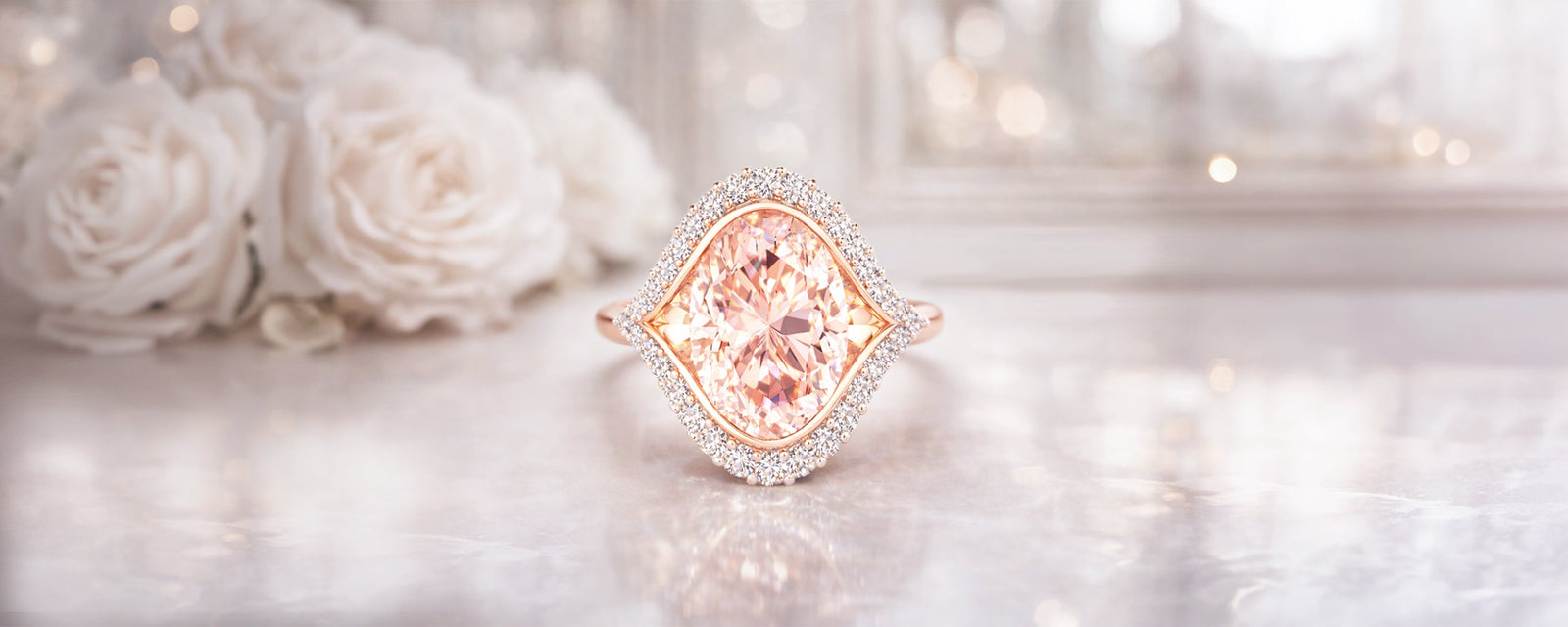
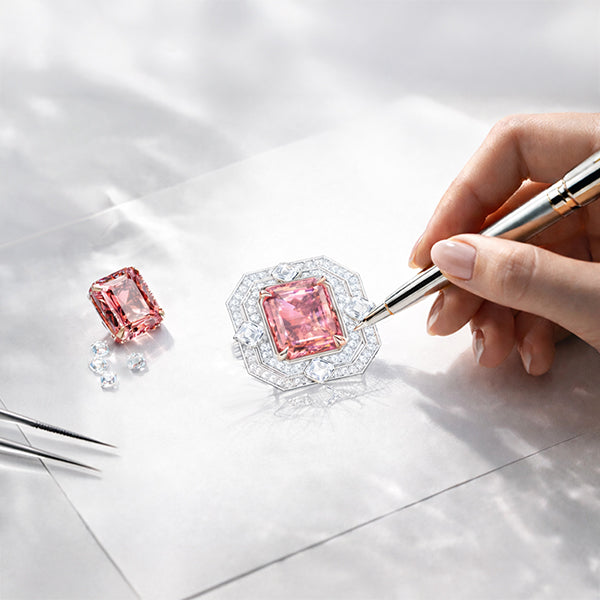
A fancy diamond is one that exhibits colour beyond the "normal" range—beyond Z on the standard scale. Rather than diminishing value, these colours define it. From soft champagne tones to fiery pinks and oceanic blues, fancy diamonds are rare, radiant, and often revered as collector’s treasures. Diamonds can be found in almost every colour.
Grading the Colour Spectrum
Fancy diamonds are evaluated not by how little colour they display, but by how richly they wear it. The grading scale includes:
- Fancy Light
- Fancy
- Fancy Intense
- Fancy Vivid
- Fancy Deep
- Fancy Dark
Each grade speaks to the diamond’s colour saturation and strength, with vivid, deeply saturated hues commanding the highest premiums.
A Kaleidoscope of Possibilities
Fancy diamonds appear in an astonishing range of colours, each telling its own geological story:
Yellow – often caused by traces of nitrogen
Blue – usually linked to boron within the crystal lattice
Pink – believed to form through immense structural pressure
Green – coloured by natural radiation over millennia
Red & Purple – exceptionally rare, with causes still under scientific investigation, but this is what we know thus far.
Crystal Lattice Distortion (Plastic Deformation):
Red diamonds owe their colour primarily to plastic deformation of the diamond’s crystal lattice during its formation or after it was formed deep within the Earth.
This deformation changes the way the diamond absorbs and transmits light, resulting in red or pink hues. In rare cases, this distortion is extreme enough to appear pure red.
Purple diamonds, particularly from regions like Russia (Siberia) or Canada, also owe their colour to a similar type of lattice distortion, though it may differ slightly in nature from the deformation in pink or red diamonds.
Graining Patterns:
The colour in pink to red diamonds is sometimes aligned with internal graining. The more intense the graining, the more saturated the colour can become.
Hydrogen or Other Defects (Possible for Some Purples):
In some violet or bluish-purple diamonds, particularly those from Australia’s Argyle Mine, trace amounts of hydrogen or other defects in combination with deformation can contribute to the purple tone.
Rarity and Value
Fancy colour diamonds are significantly rarer than their colourless counterparts. Natural pinks, blues, and especially reds occur in such scarce quantities that they are among the most coveted gems on earth. Their value is largely determined by the purity and intensity of their colour—vivid and deeply saturated stones are the most prized.
Natural vs. Treated
It’s essential to distinguish between natural fancy colour diamonds and those that have been treated or enhanced. At Xemplare, we value the authenticity of nature’s palette. Every fancy colour diamond we offer is selected with strict adherence to transparency, integrity, and certified origin.
In a world where rarity reigns supreme, fancy diamonds offer a mesmerising reminder that true beauty lies not in conformity, but in colourful individuality.