








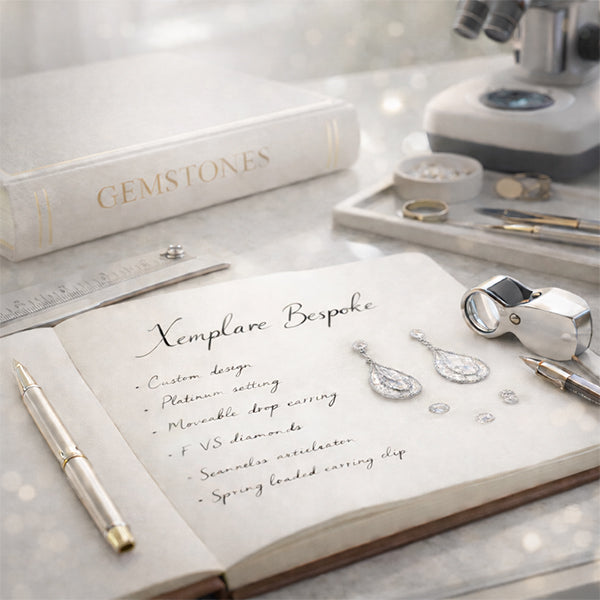

Lab-Grown Diamonds, Imitations & Treated Diamonds
Important Statement
At Xemplare, we only use natural, untreated, mined and ethically sourced diamonds.
Any diamond supplied by Xemplare 0.30ct or larger will always be accompanied by a reputable international certificate. Usually, GIA but IGI, HRD, AGS and GSL are also acceptable options.
The below is for educational purposes
Everything You Need to Know
When investing in fine jewellery, the beauty of a diamond is only part of the story. How that diamond was created, whether it has been altered, and how it compares to other diamond lookalikes are equally important. For discerning buyers, understanding the difference between lab-grown diamonds, imitation stones, and treated natural diamonds is essential in making an informed and confident choice.
At Xemplare, we believe that transparency and education are as valuable as the pieces we create. Let’s explore each of these categories in detail.
What Are Lab-Grown Diamonds?
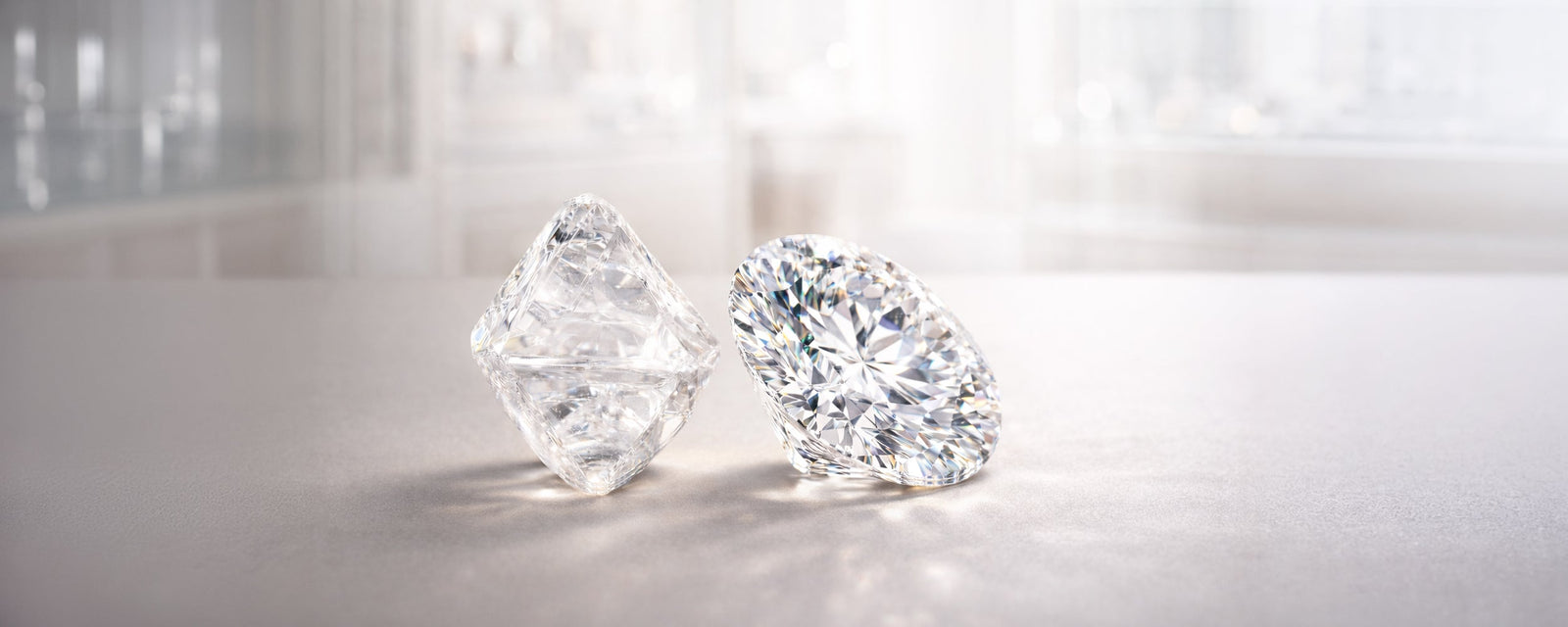
Lab-grown diamonds are real diamonds created above the earth rather than below it. They share the same chemical, optical, and physical properties as mined diamonds — meaning they are composed of pure carbon, with the same brilliance, fire, and hardness.
Two main methods are used to create them:
High Pressure High Temperature (HPHT): Mimics the natural forces deep in the Earth by subjecting carbon to immense heat and pressure until it crystallises into diamond.
Chemical Vapour Deposition (CVD): Grows diamond crystals layer by layer in a plasma chamber, offering precision and control over the growth process.
Why buyers choose lab-grown diamonds:
It’s usually all about the price. When lab grown diamonds became commercially available they were typically priced 30–40% lower than natural diamonds of comparable quality. In a very short space of time, however, the prices have tumbled to a fraction of their natural counterpart. This is mostly due to a lack of oversight and restrictions in the manufacturing sector. There is now an unlimited supply with no rarity to speak of.
Ethically sourced? There is a debate to be had about ethically sourced. To say that Lab Grown diamonds are ethically sourced and implying that mining is not, is a highly inaccurate statement at many levels. Today, more than ever diamond mining is highly transparent with very stringent global compliance requirements.
Larger stones are generally certified by leading gemmological institutes such as GIA and IGI. The same as naturals. The certificate will distinguish between natural and lab grown.
Important to note: To the naked eye, lab-grown diamonds are indistinguishable from mined diamonds. Gemmological testing is required to accurately distinguish the difference. In addition all certified diamonds are laser-inscribed on the girdle with at a minimum the certificate number and thus we have the ability distinguish the difference.
What Are Imitation Diamonds?
Imitations are not diamonds at all, though they may resemble one to the untrained eye. They lack the same hardness, brilliance, and durability of natural or lab-grown diamonds.
Common imitation stones include:
Cubic Zirconia (CZ): Affordable, brilliant, but softer and prone to scratching over time.
Moissanite: A lab-created gemstone with higher brilliance than diamond, though it often displays a rainbow “disco ball” effect.
Glass or Crystal: Fashion alternatives, but far less durable and lacking sparkle.
Key difference: An imitation may look similar from afar, but it does not share the intrinsic qualities — or long-term value — of a real diamond, whether natural or lab-grown.
What Are Treated Diamonds?
Treated diamonds are natural diamonds that have undergone enhancement to improve their colour or clarity. While the base stone is genuine, treatments alter its appearance.
Common treatments include:
Laser Drilling: Removes dark inclusions by burning them away with a laser.
Fracture Filling: Injects a glass-like substance into cracks to improve apparent clarity.
HPHT Treatment (for colour): Used to turn brownish diamonds into white or fancy-coloured diamonds.
Irradiation: Produces vivid colours like green, blue, or yellow.
What buyers should know:
Treated diamonds are significantly less valuable than untreated diamonds of the same appearance.
Treatments are usually permanent but can require special care.
They must always be disclosed at the point of sale.
How to Tell the Difference
For most buyers, it is nearly impossible to tell the difference between these categories with the naked eye. That’s why trusted certification and expert jewellers are vital.
Lab-grown vs natural: Both are real diamonds, but certificates will specify origin.
Imitation stones: Easier to identify under magnification due to differences in brilliance, hardness, and inclusions.
Treated diamonds: Gemmological analysis reveals laser drill marks, filler traces, or colour zoning.
Always insist on certification from respected laboratories (GIA, IGI, HRD, AGS) and purchase from reputable jewellers who guarantee full disclosure.
Which Should You Choose?
Natural diamonds: For collectors, investors, and those who value something the earth has created over billions of years, rarity and heritage.
Lab-grown diamonds: For those seeking an inexpensive alternative
Imitations: Perfect for fashion jewellery or budget-conscious buyers but not comparable in longevity or prestige.
Treated diamonds: An option if priced accordingly, but not a substitute for the value of an untreated stone.
At Xemplare, we exclusively curate natural diamonds and gemstones that meet the highest standards of quality and manufacturing.
A diamond is more than just sparkle — it’s a story of origin, transformation, and authenticity. Understanding lab-grown, imitation, and treated diamonds empowers you to invest in jewellery that carries meaning, integrity, and enduring beauty.